

Summer in the Phoenix Valley is not a slow season for backyards. It is the busiest one. Kids are out of school. Families are entertaining. Weekend gatherings stretch into the evening. Your yard takes more foot traffic in June, July, and August than any other time of year.
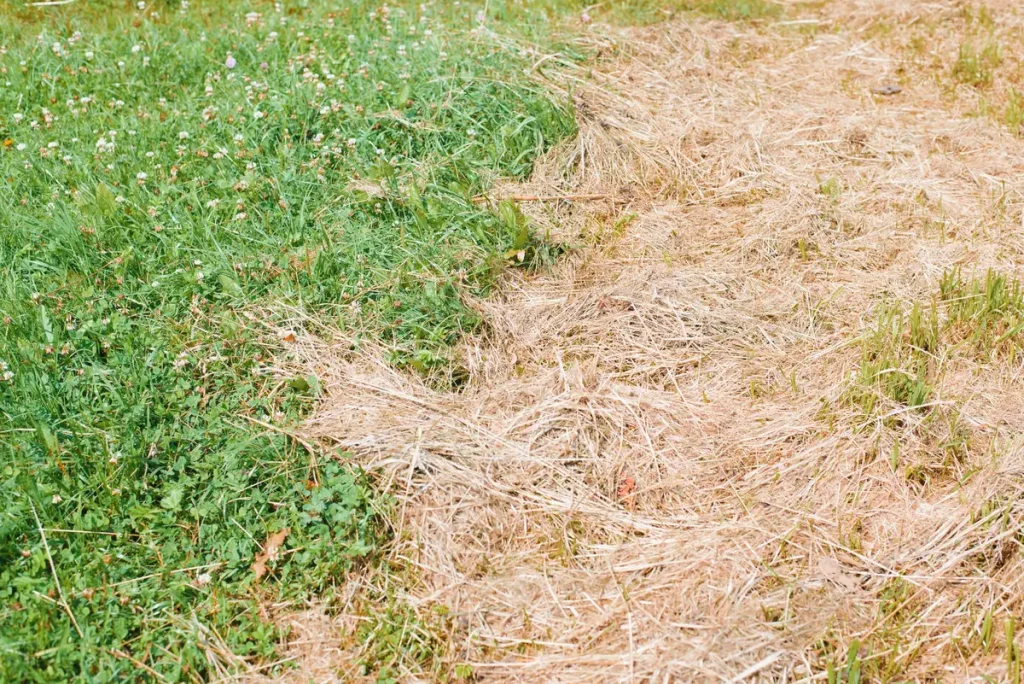
The problem? Most Phoenix yards are not designed to handle it. Patchy natural grass gives up entirely. Bare dirt patches turn into dust. Gravel gets tracked through the house. The space that should be the centre of summer life becomes somewhere you avoid.
We have designed and installed outdoor spaces across the Valley for years. The yards that hold up through Arizona summers share a few things in common. This post covers what those things are — and how to get your outdoor space ready before the heat arrives.
What Arizona Summers Actually Do to a Yard
Before talking solutions, it helps to understand the problem clearly.
Natural grass begins to struggle once temperatures consistently exceed 95°F. Bermuda grass — the most heat-tolerant option in the Valley — can survive Arizona summers but requires frequent deep watering, fertilising, and overseeding. Even well-maintained Bermuda develops thin or bare patches under heavy foot traffic. Those patches dry out fast and turn to dust.
Bare soil and decomposed granite compact under traffic and shed heat aggressively. Neither is comfortable for kids playing barefoot.
Older or poorly installed artificial turf can become uncomfortably hot in direct afternoon sun. This is a real concern, and it deserves an honest answer. Surface temperatures on low-grade or improperly infilled turf can get high enough to be uncomfortable for pets and children.
The good news is that a yard designed with the right materials, layout, and specifications handles Arizona summers very differently. The key is making intentional decisions before summer arrives — not reacting after the lawn is already brown.
How Quality Artificial Turf Holds Up Under Heavy Use
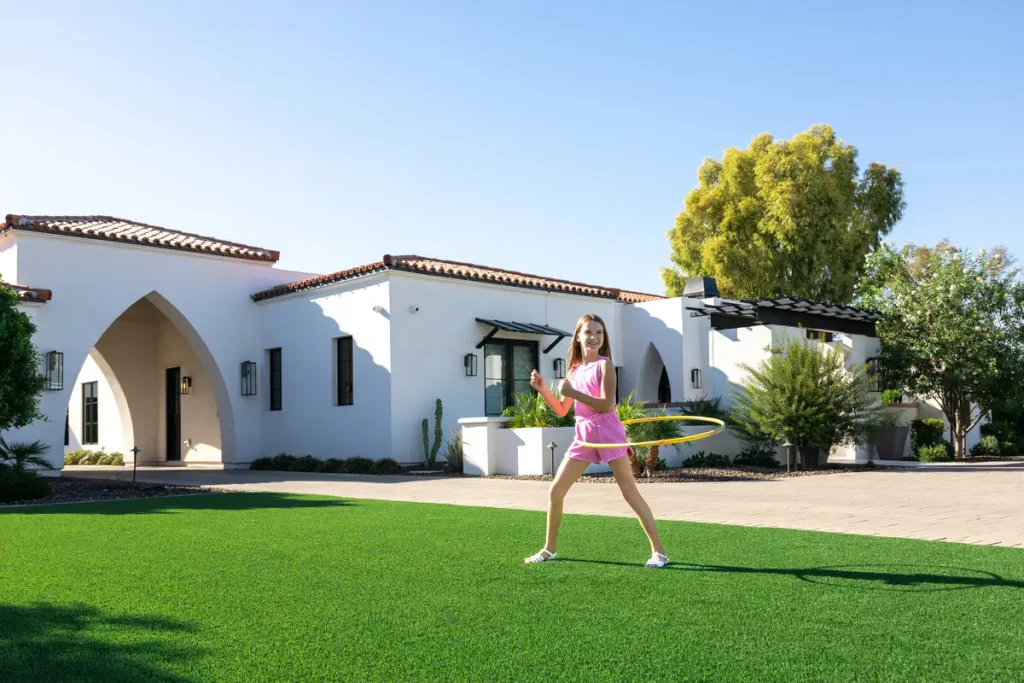
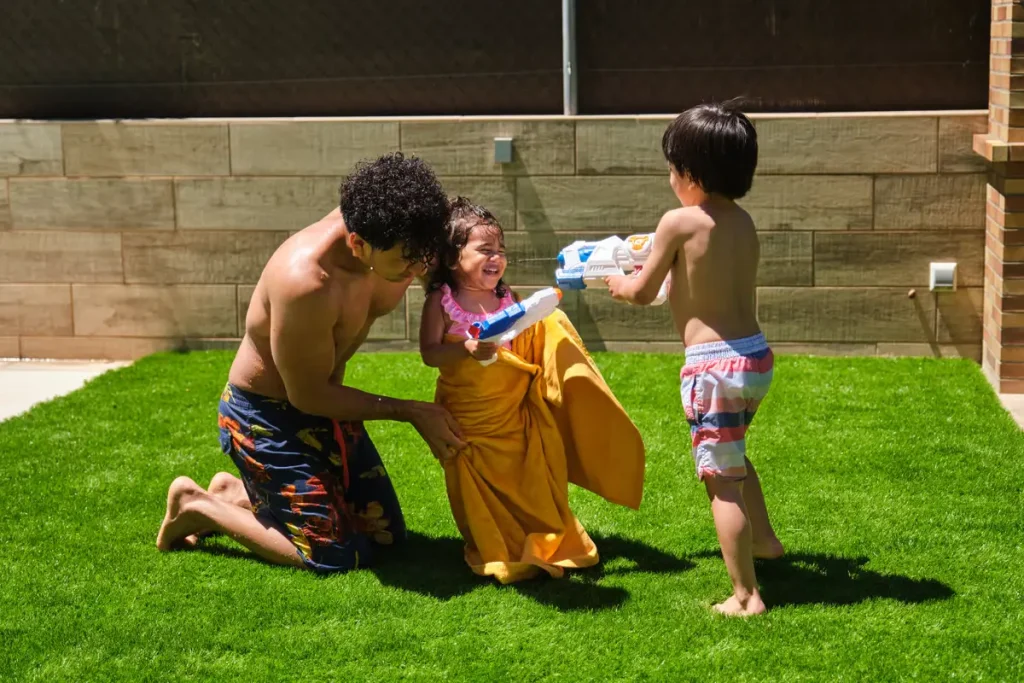
Durability under foot traffic is one of artificial turf’s genuine strengths. Unlike natural grass, turf does not die in high-traffic zones. The areas where kids run most — along fence lines, across goal-mouth paths, around play equipment — stay green and intact.
Here is what makes the difference in a high-traffic install:
- Pile height and fibre type. Shorter pile heights in the 30mm to 40mm range typically perform better in play areas. Polyethylene fibres are soft underfoot and resilient under repeated compression.
- Backing quality. A strong, perforated backing holds the turf structure together and allows drainage. In Arizona, drainage backing is essential. Summer monsoon storms drop significant water fast. A yard that drains poorly creates standing water and odour problems.
- Infill density. Properly filled turf blades stay upright under pressure and return to shape after use. Under-filled turf mats down quickly in high-traffic areas and looks worn within a season.
We have installed turf on properties with large dogs, young kids, and frequent outdoor entertaining. A properly specified install handles that level of use for years without meaningful degradation.
Designing a Yard That Stays Usable in the Heat
A summer-ready Arizona yard is not just about the turf itself. It is about how the whole space is laid out and what it includes.
Shade First
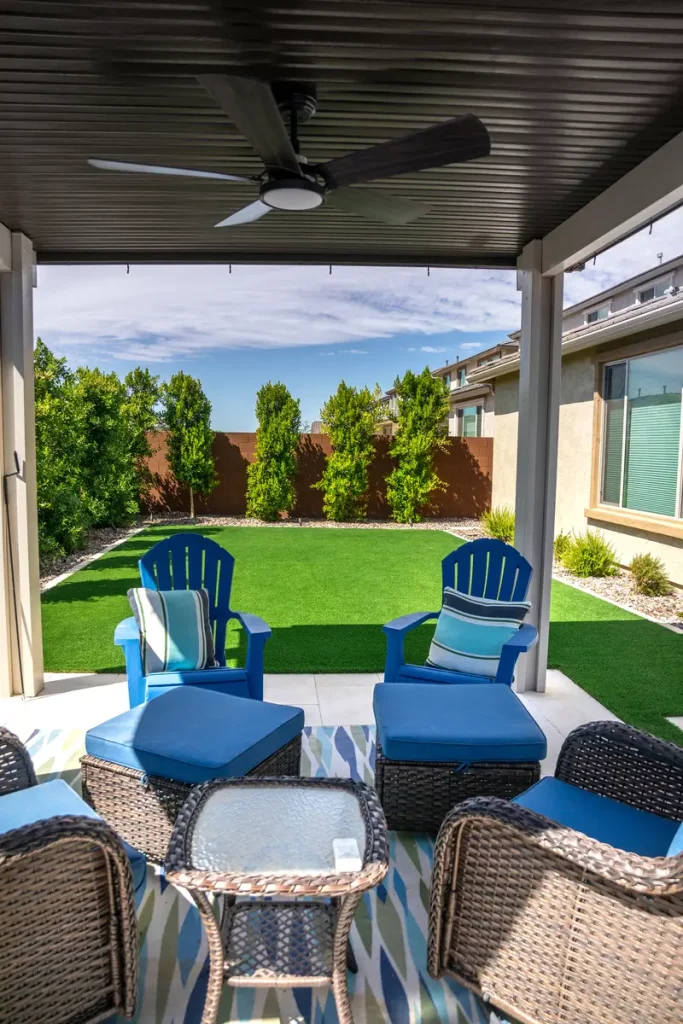
Shade is not optional in Phoenix. A yard with no overhead coverage becomes unusable between 11am and 5pm for roughly four months of the year. Design decisions around shade pay dividends every single day of summer.
Options that work well in Valley yards:
- Shade sails are affordable, stylish, and highly effective. A well-positioned sail angled to block afternoon western sun can reduce surface temperatures significantly. They can be attached to existing structures or freestanding posts.
- Pergolas and ramadas provide permanent coverage and can support outdoor fans, lighting, and misting systems. A covered outdoor structure extends usable hours dramatically in summer.
- Mature trees take time to grow but provide the best natural shade. If you are planting trees alongside a turf install, position them on the western or southwestern side of the yard to intercept afternoon sun.
A Surface That Performs Under Pressure
Not every part of a yard needs to be turf. A thoughtful outdoor design often combines turf with pavers or concrete in high-wear zones — along pathways, around fire pits, beneath dining furniture — and turf in the open play and lawn areas.
Pavers stay cooler than solid concrete in direct sun and do not crack or shift the way poured concrete can over Arizona’s extreme heat cycles. They also give your yard visual structure and defined zones — dining areas, lounging areas, play areas — that make the space feel more intentional.
This combination approach, turf for soft-surface areas and pavers for hardscape zones, is one of the most practical outdoor designs for Phoenix homeowners who entertain regularly.
Lighting That Opens Up Summer Evenings
Arizona summer evenings are genuinely pleasant. Temperatures drop into the mid-80s after sunset. With the right lighting, your yard becomes the most comfortable it has been all day.
Landscape lighting serves two purposes in a summer yard. It makes the space safe and functional after dark. And it transforms how the yard looks — turf, pavers, and plantings all look different at night with well-placed lighting. Pathway lights, uplighting on trees or garden walls, and string lights over a pergola combine to create an outdoor space that gets used every evening.
At Crown & Blade, we design and install lighting as part of full outdoor transformations. It is often the last piece that makes everything else come together.
Managing the Heat: Practical Tips for Summer Turf Care
Even a well-designed yard benefits from a few simple summer habits.
Rinse the turf in the morning. A quick hose-down before the day heats up significantly cools the surface within minutes. The water evaporates and carries heat with it. This is especially useful before outdoor events or before kids and pets head outside.
Check your infill. Over time, infill can shift or compact unevenly. A turf surface that is running hotter than expected often just needs an infill top-up. Cooling infill options, including acrylic-coated sand, can reduce surface temperatures noticeably compared to standard rubber alternatives.
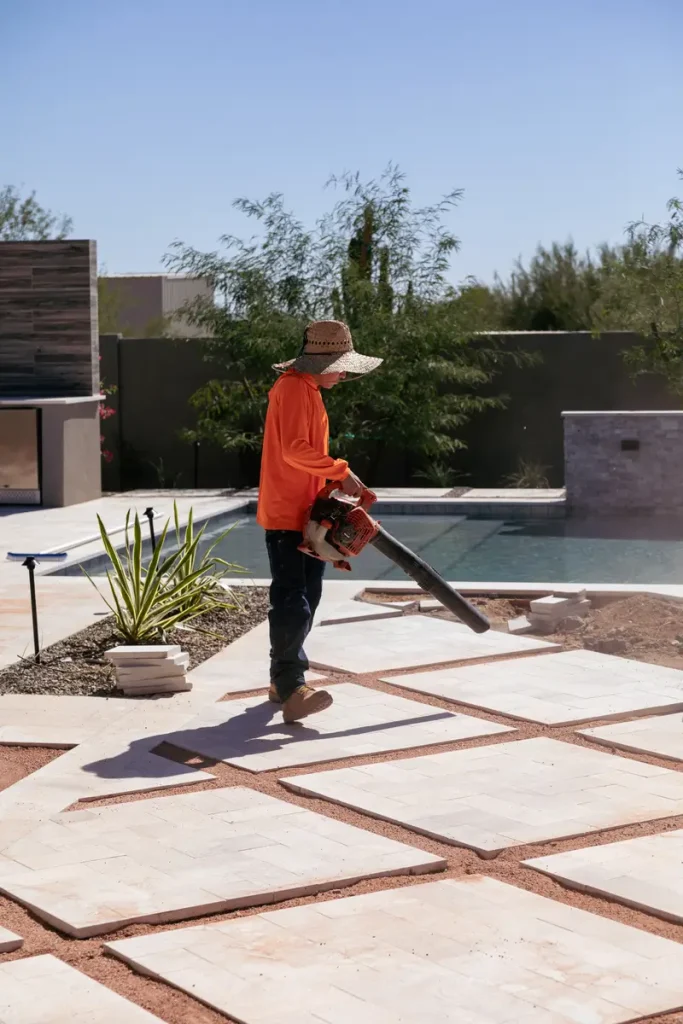
Clear debris after monsoon storms. Phoenix monsoon season runs from roughly mid-June through September. After a storm, leaf debris, dirt, and organic material can sit in turf fibres and create odour or drainage issues if left. A leaf blower or stiff broom keeps the surface clean and the backing draining properly.
Inspect seams and edges in spring. Heat and UV exposure over previous summers can affect adhesive at seam lines and perimeter edges. A quick visual check before summer entertaining season means small issues get caught before they become visible problems.
When to Act: The June Window
If you have been considering an outdoor upgrade — turf, pavers, lighting, or all three — June is the practical deadline before summer heat and demand reshape what is possible.
Once Phoenix temperatures consistently exceed 105°F, installation timelines lengthen. Ground conditions become more demanding. Quality installers book out further as the reactive wave of calls comes in from homeowners dealing with dead lawns in June and July.
A project started now is finished before the heat peaks. Your yard is ready for the first gathering of the season. Your kids have a surface to play on from day one of school holidays.
If you want a yard that works as hard as your family does this summer, the time to move is now. Request a free quote or call Crown & Blade directly at (623) 343-1892.


